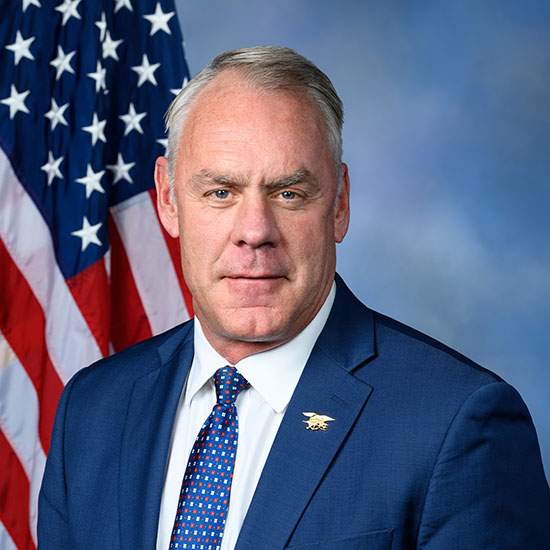
Congressman Ryan Zinke is a fifth-generation Montanan who represents Montana’s First Congressional District, which includes 16 counties in western Montana, as well as the cities of Bozeman, Butte, Missoula and Kalispell. He was first elected to Congress in 2014 and served as the U.S. Secretary of the Interior between two noncontiguous terms. Congressman Zinke has established a strong record of accomplishments in areas such as energy, conservation, tribal matters and military issues. Now in his third term, he is a member of the House Committee on Appropriations. His legislative agenda focuses on restoring accountability to federal spending, promoting American energy dominance and strengthening national security at our borders and beyond.
We recently sat down with Congressman Zinke and discussed his service, leadership, Montana values and the issues he is focusing on in Washington. The following are excerpts from our conversation.
What inspired you to pursue public service?
Public service wasn’t something I woke up one morning and decided to do — it was something I grew into. I was raised in Montana, and in a place like this, you learn early that you look out for your neighbors. If a fence is down, you help fix it. If someone’s in trouble, you don’t ask whose job it is — you step up. That mindset stuck with me.
My first real step into service was through the military. I spent 23 years as a Navy SEAL, and that experience continues to shape how I see the world to this day. The military teaches you discipline, accountability and the idea that the mission comes before the individual. You also learn that leadership isn’t about rank; it’s about responsibility. Those lessons translate directly into public service.
After retiring from the Navy, I remained involved at the local level, coaching, working with veterans and eventually serving in the Montana State Senate. What motivated me to run for Congress was a sense that Montana needed a strong voice in Washington, someone who would fight for our way of life instead of apologizing for it. I didn’t get into this to be a politician; I got into it to serve — plain and simple.
What are your thoughts on the direction of the administration, and how has it been to work with President Trump?
I’ll start by saying this: President Trump is exactly who people think he is. He is doing exactly what he campaigned for and was elected to do. He’s direct, he’s results-oriented, and he doesn’t have much patience for Washington games. From my perspective, that’s not a bad thing. Too often, this town gets bogged down in processes and politics rather than focusing on outcomes.
Working with President Trump has always been about getting things done. When I served as Secretary of the Interior, the focus was on American energy independence, access to public lands and cutting through unnecessary red tape. As a member of Congress, my priority is to ensure that Montana’s interests are at the forefront as the administration sets its agenda.
I think the direction of the administration reflects a broader frustration that many Americans share. People want secure borders, a strong economy, respect for law enforcement and the military, and a government that doesn’t overreach into their daily lives. You don’t have to agree with every social media post or every headline to recognize that there’s a real push to shake up a system that hasn’t been working for America’s families.
At the end of the day, my job isn’t to be a cheerleader or a critic; it’s to be an advocate for Montana. When the administration’s policies help our state, I support them. When they don’t, I say so. That’s how representation is supposed to work.
What are the main issues you’re currently working on?
The list is long, but a few priorities rise to the top. First and foremost is the economy. Montana may be big and rural, but we’re not immune to inflation, supply chain disruptions and rising costs. Families feel it at the grocery store, at the gas pump and when they’re trying to make big purchases. I’m focused on policies that rein in spending, support small businesses and encourage job growth.
Energy is another major issue. Montana is an energy-rich state — we produce coal, oil, gas and renewables. I believe in an all of the above approach. We can be good stewards of the land while also recognizing that affordable, reliable energy is essential to our economy. Shutting down domestic production doesn’t help the environment; it just makes us more dependent on foreign sources.
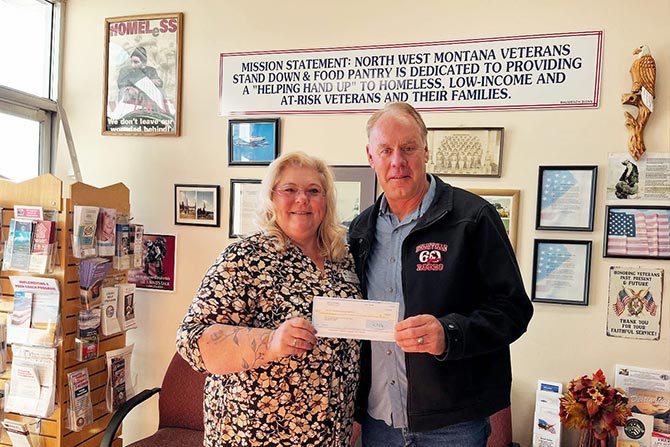
Veterans’ issues are also close to my heart. We owe our veterans more than words — we owe them action. That means timely access to health care, support for mental health and PTSD, and making sure veterans can transition successfully into civilian life. Montana has one of the highest per capita veteran populations in the country, so this isn’t an abstract issue for us.
Finally, I spend a lot of time on public lands and outdoor access. Montanans love their public lands, and so do I. The key is balance — keeping lands open for hunting, fishing, grazing and recreation while ensuring they’re managed responsibly. Decisions about Montana land should involve Montanans, not just bureaucrats in D.C.
How do you balance the demands of public service with your personal life?
I won’t pretend it’s easy. Public service, especially at the federal level, is demanding. You’re traveling constantly, your phone never stops ringing, and the issues don’t take weekends off. But balance is important, and it’s something I work at every day.
For me, it starts with remembering who I’m doing this for. My family keeps me grounded. When I’m back in Montana — whether it’s in Whitefish, Kalispell or somewhere in between — I try to unplug and just be home. That might mean getting outside, spending time on the water or sitting down for a meal without checking my phone every five minutes.
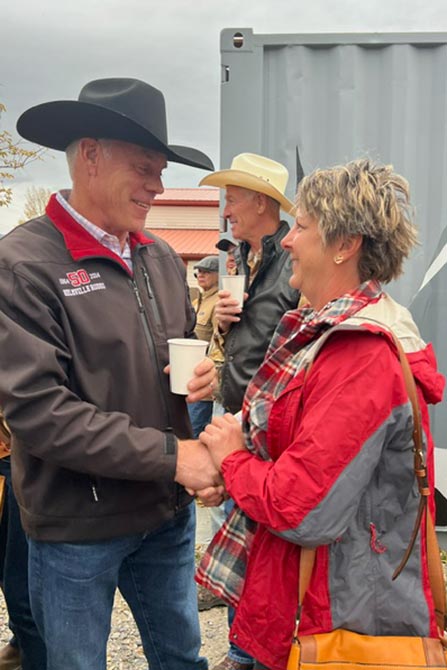
I also believe in staying connected to the state. Washington can be a bubble, and it’s easy to lose perspective if you’re not careful. Coming home, talking to folks at the coffee shop, visiting local businesses and attending community events remind me why the work matters. It’s not about headlines; it’s about real people and real lives.
The military taught me time management and focus, and those skills help. When you’re clear about your priorities, you make time for what matters most.
What message would you like to give to Montana auto dealers?
I would like to express my gratitude. Auto dealers are the backbone of communities across Montana. You’re employers, sponsors of local teams and events, and trusted partners for families making one of the biggest purchases of their lives. The local dealership is more than a business — it’s part of the community fabric.
I know the past few years haven’t been easy. Supply chain issues, regulatory uncertainty and rising costs have created real challenges. My message is this: I hear you, and I’m working to make sure Washington understands what those challenges look like on the ground in Montana.
We need policies that support small and family-owned businesses, not bury them in paperwork. That means reasonable regulations, fair tax policy and trade rules that don’t put American dealers at a disadvantage. It also means investing in infrastructure so vehicles — and customers — can move efficiently across a big state like ours.
I’d also encourage dealers to stay engaged. Your voice matters. When you tell your story — about workforce needs, financing challenges or consumer demand — it helps shape better policy. My door is always open, and I value that input.
Montana works when we work together. Whether you’re selling pickups in Havre or SUVs in Bozeman, you’re helping keep Montana moving. I’m proud to represent you, and I’ll keep fighting to make sure you can keep doing what you do best.