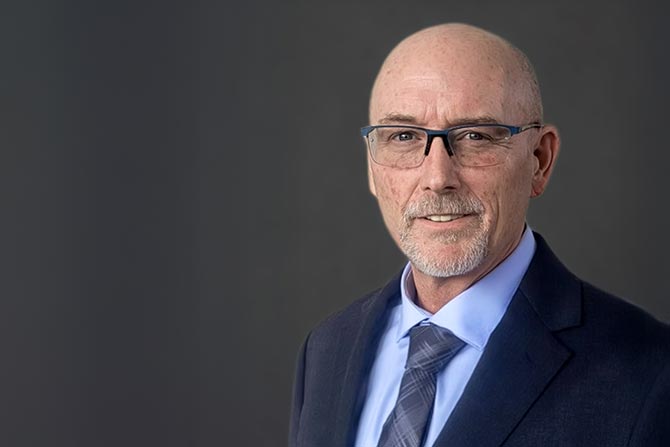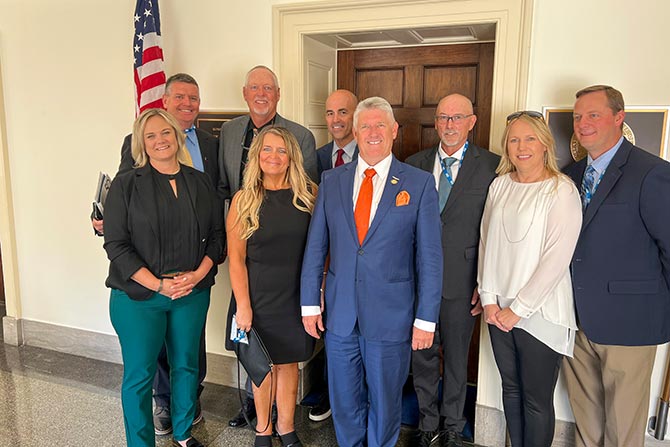
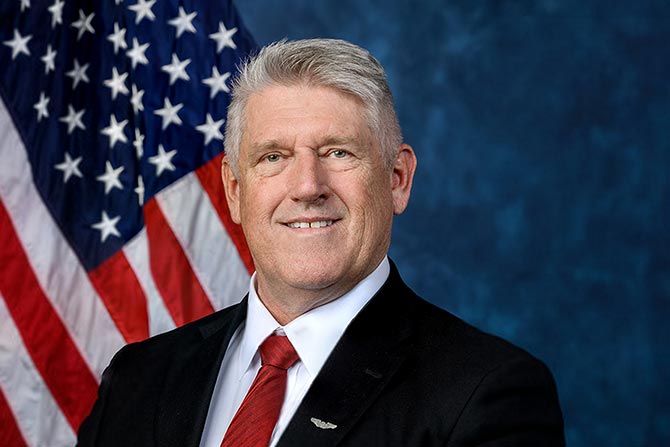

Congressman Troy Downing is currently serving his first term as the United States Representative for Montana’s Second Congressional District. We recently had the opportunity to catch up with him and discuss his experience so far. The following are excerpts from our conversation.
What inspired you to pursue public service?
To answer that, I would need to start with my beginnings. I was the unplanned pregnancy of an unwed teenage mom. She worked in the local grocery store and did her best to provide for us. She didn’t have family to lean on for support, so growing up, I often went home to an empty house. I don’t say that as a negative; I actually see that as a positive. When kids grow up that way, they develop a different set of survival skills. If you wanted something, you had to work for it. You had to figure things out on your own. And I did.
I ended up attending New York University (NYU), which proved challenging for someone with limited financial means. I used to spend hours in the library, going through big phone books of scholarships, applying to every one that I possibly could. I took out student loans, worked hard and did everything I possibly could to eke through. I ended up being successful and was hired at New York University as a research scientist at the Courant Institute of Mathematical Sciences. Later on, I was hired as a teacher in the Computer Science Department at the NYU Institute of Technology.
For a poor kid growing up with nothing, I had made it. So, what did I do? I quit. My mom was so confused, I remember her saying, “What do you mean you quit?” I told her that I was going to launch a startup company. Long story short, that startup company ended up merging with a nascent Yahoo, and it changed my life. The next thing you know, I’m asking my mom where I can build a house for her. I parlayed that into trying to help others do the same. I did a lot of angel investing in startups and seed-funded about 150 companies. Some of those were really famous failures, and some of them were really famous successes.
After a while, I started looking for something different and began dabbling in commercial real estate while I was figuring out what was next, when something profound happened that changed the direction of my life.
My friend Jerry and I were moose hunting in Alaska. We were dropped off by a 1941 Grumman Goose in the remote wilderness, and our only means of communication was aviation radio. When a plane flew overhead, I could relay a message back to the bush pilot who dropped us off to come pick us up.
We ended up shooting a large moose way outside of camp. It took us three-plus days to hike it back to camp. While we were hiking, I never saw an airplane or any contrails which was odd. I remember saying to Jerry, “Something bad has happened. What could have happened to make airplanes stop flying?” My gut reaction was that some kind of nuclear holocaust had happened. I told Jerry that if they didn’t pick us up by the planned date, we needed to start hiking to Anchorage, which was 350 miles of mountains, glaciers, rivers and lakes.
On the day we started packing up camp, we heard the plane that dropped us off in the distance. It landed on the lake and tailed into shore, the pilot shut down the engines, stuck his head out the window and said, “They blew up the World Trade Center. They took them both down.” As my brain was trying to process this, it hit me in the chest. First, an overwhelming sadness, I had no idea how many people lost their lives. Then I felt the anger of being attacked on our own shores. As all these emotions welled up in me, and I thought, “I came from nothing, and look what I was able to do. This country, which has been so good to me, is under attack. What have I ever done to deserve this?” And I didn’t have a good answer.
Despite travel restrictions being in place, I was still able to make it to Ketchikan, Alaska. It was like a new world. There was police tape everywhere, snipers on the roof, Humvees patrolling the roadways, and I wondered what I was coming back to.
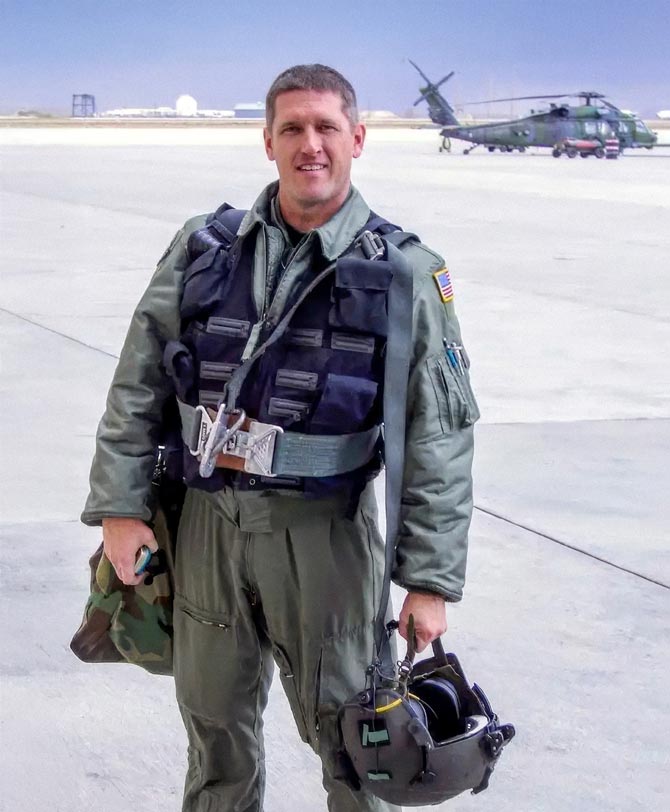
When they finally opened the borders, I flew home and walked straight into a recruiter’s office and said, “I used to teach at NYU. I have my pilot’s license. What can you do with me?” The recruiter asked me how old I was. I told him I was 34 and he said “Good, 35 is the cutoff.” I ended up getting sworn into a combat search and rescue squadron, which was a great mission. Nobody’s ever upset when search and rescue show up. I ended up doing a couple of tours to Afghanistan during Operation Enduring Freedom. After that, I served eight years in the Air National Guard. When we weren’t deployed, we did a lot of domestic search and rescue and domestic counterdrug work. This experience helped me to find the answers I was looking for when 9/11 first happened: This country’s been good to me, and I needed to feel like I deserved it.
From there, I started building a commercial real estate company with my partners, then, our own broker-dealer and then some investment banking in commercial real estate. When our commercial real estate portfolio got big enough, I saw an opportunity to self-insure. So we started a captive insurance program and then turned that into a national program of renters insurance.
Then I saw another opportunity in Montana — there’s never been a commissioner of securities and insurance who actually had a securities and insurance background. And, I thought it was a great opportunity. I ran for and won the seat of state auditor. I was in that office for four years, after which time I assembled a team and ran for Congress, and here I am today in Washington, D.C. Similar to my military experience, I have yet another opportunity today to give back. I look at young families today, trying to start off, build careers and buy their first home, and too often, that is so far out of reach. As a child who came from humble beginnings and has achieved great success, I want to ensure that opportunity remains available, that there is a path to the American dream.
As a newly elected Congressman, has anything surprised you about working in D.C.?
Not necessarily a surprise, but working in D.C. is a non-stop experience. It is a series of leaving one meeting early to arrive late to another one. You can work all day, every day, and still not accomplish everything. There is always more to be done. I’m used to working hard, and I’ve put together an incredible team to ensure things get done.
Even when I’m home in the District, I’m constantly traveling to make sure that I’m doing the District work — meeting with farmers and ranchers, natural resource folks and small business owners — listening and hearing from stakeholders and constituents.
What are your thoughts on the direction of the new administration and how it has been to work with President Trump?
Trump ran on certain issues that he was very bold about, and many of the issues he campaigned on were also issues that many Republicans, including myself, ran on. For the most part, we’ve been very aligned.
I’ve been to the White House a couple of times, and in person, the president is very likable, funny and friendly. I’ve really enjoyed working with this administration. We’re accomplishing a lot for the American people. And, for me, this administration allows me to get policy done that I ran on and promised my constituents.
What are the main issues you’re currently working on?
Montana is an energy- and agricultural-based state, and I am dealing with a lot of issues that surround those industries. In terms of both of those, I think they’re national security issues. Energy independence absolutely is a national security issue. And when it comes to our farmers and ranchers, if we lose the ability to grow food, that is probably one of our biggest national security issues. Throughout the history of humanity, if you want to bring a country down, you make it so it can’t feed itself.
The other issues I am focused on are right-sizing regulations so that we’re not putting bottlenecks on access to capital, so that capital markets are available. We don’t want a weaponized Consumer Financial Protection Bureau (CFPB) that is essentially slowing down the ability of community lenders to provide money to farmers, ranchers and individuals seeking car loans. By reigning in the CFPB, we allow bankers to do what they know best: underwrite the person they know, the business they know, the product they know, the house they know and the industry they know.
At the end of the day, whether you’re a family starting out, a small business or an auto dealer, one of the biggest limiting factors in being able to not just survive but grow is access to capital. That’s a big thing that I’m working on in the Financial Services Committee. If people aren’t accessing capital, they’re not buying cars, fixing cars or doing any of those things. So, making sure that, on the financial services side, we are right-sizing regulations and protecting the consumer so they can invest in their family, invest in their future, buy their house and buy their car, is a priority.
What message would you like to give to Montana auto dealers?
I want them to know that my goal is to make sure that there’s still a path to build that American dream — anything that I can do to make sure that small businesses and auto dealers, many of which are family businesses, succeed.
I sit on the Small Business Committee and the Financial Services Committee and I, along with my colleagues, am trying to limit the hurdles that have to be met. I want constituents to build their small businesses and have their family businesses thrive.
The other thing that affects everybody, and not only affects the auto dealers, is access to capital. I want the auto dealers who are reading this to know that we’re doing everything we can to ensure that business in Montana and across the country, not just survives, but thrives.