

As they say, “a word to the wise . . .”
The Clean Air Act (CAA) was enacted by Congress in 1970 and amended in 1977 and again in 1990. Section 42 U.S.C. § 7522(a)(3)(B) of the CAA prohibits the manufacture, sale or offer to sell or install a part or component for a motor vehicle, where a principle effect of the part or component is to bypass, defeat, or render inoperative any emission control device. Further, it is a crime under 42 U.S.C. § 7413(c)(2)(C) to falsify, tamper with, render inaccurate, or fail to install any “monitoring device or method” required under the CAA. Vehicle Onboard Diagnostics (OBD) are such a “monitoring device or method” required by the CAA. Criminal penalties can include large fines and jail time.
The civil penalties alone are significant. Manufacturers or dealers are exposed to $45,268 per violative vehicle or engine. Max penalty for individuals is $4,527 per violative vehicle or engine. Max penalty per defeat device is $4,527. Penalties are in addition to the cost of bringing the violative vehicle or engine back into compliance.
In addition to the CAA regulations, under Mont. Code Ann. §75-2-204 and Rule 17.8.325, MAC, it is unlawful under Montana law to remove, alter or otherwise render inoperative, exhaust emission control, crank case ventilation or any other air pollution control device which has been installed as a requirement of federal law or regulation AND it is unlawful to operate a motor vehicle originally equipped with air pollution control devices as required by federal law or regulation on the highways of this state unless such devices are in place and in operating condition. A violation is punishable by a fine of not more than $10,000 per violation or imprisonment for a period not to exceed two years, or both under Mont. Code Ann. §75-2-412.
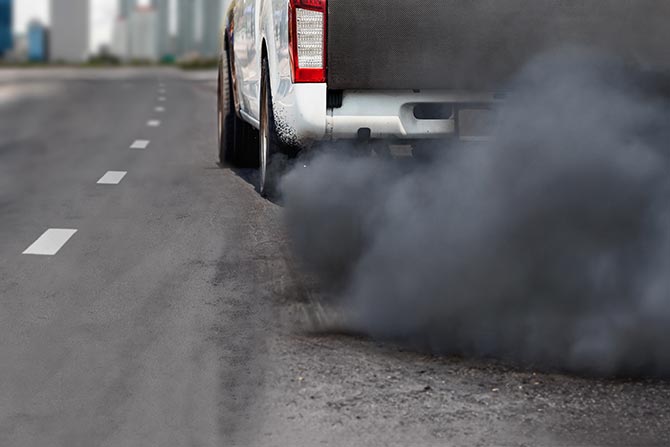
Most dealers understand, or are at least aware of, these prohibitions. However, the proliferation of “deleted” vehicles — particularly diesel pickups — in the stream of commerce shows that not everyone appreciates the risk. A 2020 EPA report estimates that between 2009 and 2019, 9,199 (10.9%) of the 84,114 registered diesel vehicles in Montana were deleted. This places Montana 18th in the nation, behind North Dakota (18%), Idaho (15%), Wyoming (14%), and Washington (13%). A significant number of these deleted vehicles pass through nearby auction markets each week, indicating strong public demand.
Taken literally, it is not illegal under the CCA or the Montana Code to buy or to sell vehicles with, for instance, the EGR valves removed; however, once the EGR valve is removed, it is illegal to operate the vehicle on the roads of Montana. Since it is not lawful to operate a modified vehicle here, we have advised Montana dealers for a long time not to sell deleted vehicles at retail. A retail sale raises the risk that the consumer will come back on the dealer to remedy the problem or seek to unwind the deal or recover damages under the Consumer Protection Act. It’s a no-win situation, and there appears to be more trouble on the horizon.
The EPA appears to be expanding its interpretation of the prohibition against selling defeat devices to include the sale of a vehicle received in trade or purchased at the auction with defeat devices already installed. This represents an expansion of the prohibition over that applied in prior caselaw and EPA’s prior applicable written guidance.
We’ve become aware of expanded enforcement activities in Montana as the EPA has recently visited Montana dealerships looking for deleted vehicles in inventory and initiating investigations into the extent of the dealer’s trade practices. While the buying and selling of deleted vehicles is not prohibited by the CCA on its face as noted above, the legal basis and incentive for the present EPA activity appears to be the expanded interpretation of the prohibition of selling defeat devices noted above and a recent Utah case in Federal Court, Utah Physicians for a Healthy Environment v. Diesel Power Gear, LLC 21 F. 4th 1229 (December 2021).
There, a nonprofit organization of healthcare professionals and citizens sued several businesses and individuals involved in modifying diesel trucks in Federal Court, alleging they tampered with or removed emission-control devices, installed “defeat devices,” and bought and sold vehicles with defeat devices installed. The organization sought declaratory and injunctive relief, as well as civil penalties. After a bench trial, the District Court found in favor of the nonprofit, holding the defendants liable for hundreds of violations and imposing over $760,000 in civil penalties, along with injunctive relief. The 10th Circuit Court of Appeals (based in Denver, where the EPA has its regional offices, including jurisdiction in Montana) upheld most of the District Court decision, holding:
- The Clean Air Act (CAA) prohibits any person from selling or offering to sell vehicles with parts (“defeat devices”) that bypass or render inoperative emission-control systems, if the seller knows or should know the part is being offered or installed for such use.
- Liability attaches regardless of whether the sale is “as-is” or if the defeat device was installed by a previous owner; the statute does not provide an exception for “as-is” sales.
- Sellers must have actual or constructive knowledge of the defeat device to be liable, but ignorance is only a defense if the seller genuinely did not know and could not reasonably have known about the device.
Related CAA enforcement actions in the Northwest by the EPA include criminal prosecution of manufacturers and installers of delete devices, including that of Sturgis mechanic Troy Lake for tampering with emissions systems. The events of his case are chronicled in an Aug. 2, 2025, online article from Cowboy State Daily. On Oct. 18, 2018, the federal government executed a search warrant on the Elite Diesel shop, which was then based in Windsor, Colorado. To the Lakes, it was a raid. “It looked like a military operation,” Holly recalled. Black SUVs converged on the block; agents emerged “in tactical gear” and rifled through the business, the equipment, the personnel files, she said. Ultimately, Troy was sentenced to 12 months and one day in federal prison by a judge who was previously a lawyer for diesel manufacturer Cummins.
Hot Off the Press
In mid-November, President Trump issued a full pardon to Lake, who spent seven months in federal prison before being moved to home confinement earlier in 2025. The pardon comes on the heels of Wyoming lawmakers arguing that Lake had been unfairly targeted. U.S. Sen. Cynthia Lummis, R-Wyo., publicly criticized the prosecution and personally petitioned Trump for a pardon. In a statement, Lummis said Lake’s case was an example of federal overreach, calling the Biden administration’s handling of environmental enforcement “weaponized.” Lummis also introduced a bill that seeks to undo emissions systems requirements on motor vehicles, free diesel “delete” mechanics from jail and expunge their civil liability judgments. If it becomes law, the “Diesel Truck Liberation Act” would signify a victory for diesel truck drivers and other diesel fleet holders — such as fire trucks, ambulances and school buses — who have removed or tampered with the mandatory emissions systems on those vehicles. The U.S. EPA’s recent shift into prosecuting delete mechanics has changed the course of at least two Wyoming mechanics’ lives and businesses. Lummis said in a statement Tuesday that Lake’s case inspired her bill.
A similar filing against Levi Krech was dismissed on Nov. 26, 2025, by Wyoming U.S. Attorney Darin Smith against Gillette-raised mechanic Levi Krech. In April 2022, federal agents in bulletproof vests raided Krech’s shop, sparking small-town rumors that he’d been running drugs or that a murder had happened in the shop, he said. The rare dismissal, and a Trump pardon for Troy Lake, may signal a less aggressive approach toward the practice. Deleting emissions devices is still illegal, and many prosecutors treat it as a crime. But Lake’s pardon and Krech’s dismissal also could signal a shift from the White House and other governmental spheres. U.S. Attorney General Pam Bondi on Feb. 5 issued a notice to all U.S. Department of Justice employees, warning against pursuing criminal charges where not “appropriate.” The EPA in July announced a plan to relax rules regarding tailpipe emissions. And the U.S. House Committee on Oversight and Government Reform discussed the exact issue in September, contemplating whether the federal government should criminalize diesel delete “tunes” or take a lighter touch (Cowboy State Daily, Nov. 26, 2025). Only time will tell.
If The EPA Comes Calling
In the meantime, if the EPA comes calling on your dealership and you happen to have (or have recently had) a deleted diesel on the lot and the EPA calls you or sends you a letter requesting a lot of confidential dealership information, what do you do? Here are a few tips:
- Ask for written requests.
- If contacted by phone, do not provide substantive information on the call. Request that the inquiry be put in writing.
- If contacted by phone, do not provide substantive information on the call. Request that the inquiry be put in writing.
- Do not ignore an EPA letter.
- The EPA has broad investigative authority. If needed, request an extension, but respond by the deadline, even if your response is partial.
- The EPA has broad investigative authority. If needed, request an extension, but respond by the deadline, even if your response is partial.
- Involve counsel immediately.
- Engage counsel with Clean Air Act experience. If your regular counsel lacks this background, ask for a referral to a CAA specialist.
- Engage counsel with Clean Air Act experience. If your regular counsel lacks this background, ask for a referral to a CAA specialist.
- Notify your insurer.
- Contact your garage keeper’s carrier. Coverage may be available, and the insurer may provide counsel even if fines are not covered.
- Contact your garage keeper’s carrier. Coverage may be available, and the insurer may provide counsel even if fines are not covered.
- Take corrective action and document good faith.
- In consultation with counsel, review and correct issues promptly. This may not prevent enforcement, but can mitigate consequences and demonstrate good faith.
- In consultation with counsel, review and correct issues promptly. This may not prevent enforcement, but can mitigate consequences and demonstrate good faith.
- Protect confidentiality and object where appropriate.
- Anything submitted to the EPA becomes a public record. You can raise targeted objections (e.g., overbreadth, relevance, undue burden, lack of authority).
- Protect confidential business information and legally protected personal data. Clearly mark all produced records “Confidential Business Information.”
Bottom Line
Given the current enforcement posture and penalty structure, Montana dealers should assume that any involvement with deleted vehicles carries outsized legal and financial risks that are high and increasing. For Montana dealers, the safest course is to stay out of the deleted vehicle market entirely.
The Smith Law Firm provides quality legal services to our clients through our stability, professional standards and competent attorneys and staff. They are here to serve Montana’s auto dealers. To learn more, please visit smithlawmt.com or email Jim Sewell at jsewell@smithlawmt.com or Craig Charlton at ccharlton@smithlawmt.com.